Commercial refrigeration in Adelaide is a significant investment for any business. The process involves more than simply selecting a unit and having it delivered. A well-managed installation requires preparation, coordination and follow-through to ensure the system performs reliably from day one and continues to do so for the years ahead.
This guide walks Adelaide business owners through every stage of the process. Whether you are a hospitality operator fitting out a new kitchen, a retailer upgrading your cold chain, or a medical facility managing temperature-sensitive stock, the fundamentals apply across every application of commercial refrigeration Adelaide businesses rely on.
Before Your Commercial Refrigeration Adelaide Install: What to Prepare
The groundwork you lay before a technician arrives on site determines how smoothly the installation goes and how well the system performs long term. Rushing this stage is where most avoidable problems originate.
Site Assessment
A licensed refrigeration technician should assess your site before any equipment is ordered or delivered. This establishes the ambient temperature range, available floor space, ceiling height, ventilation clearances, electrical capacity and drainage routing – all of which affect equipment selection and installation method.
Equipment Selection
Based on the site assessment, you will confirm the equipment type, capacity, refrigerant and configuration. For cool rooms, panel dimensions and refrigeration unit sizing are calculated at this stage. For self-contained units, climate class rating and footprint compatibility are confirmed before ordering.
Electrical and Trade Readiness
Many commercial refrigeration units require dedicated electrical circuits. Confirming your switchboard capacity and arranging any necessary electrical upgrades before installation day prevents costly delays. For cool rooms, plumbing and building trades may also need to be coordinated ahead of the refrigeration contractor’s arrival.
Permits and Compliance
In South Australia, certain refrigeration installations require council approval or compliance documentation under building and safety codes. Your refrigeration contractor can advise which permits apply to your project and handle the relevant submissions as part of the job scope.
The more thoroughly the pre-installation stage is managed, the less likely you are to encounter unexpected costs or delays on installation day. At Cool-Time, we conduct a full site assessment before every project and provide a detailed scope of work so there are no surprises. Book a consultation to get started.
During Commercial Refrigeration Installation in Adelaide: What Happens on the Day
A professional commercial refrigeration installation follows a structured sequence. Understanding what your technician is doing at each step helps you manage your premises and staff accordingly, and gives you confidence the job is being completed correctly.
The Installation Sequence
Site Preparation
The installation area is cleared, access routes confirmed and any required protection for existing flooring or adjacent equipment is put in place. For cool room builds, panel floor preparation begins at this stage.
Equipment Positioning and Mechanical Installation
The refrigeration unit is positioned and secured. For split systems or remote condensing units, the condensing unit and evaporator are mounted separately and connected via refrigerant pipework. Cool room panels are assembled and sealed to the required insulation standard.
Electrical and Controls Connection
The system is connected to its dedicated circuit by a licensed electrician. Controllers, thermostats and alarms are wired and configured to the specified set points for your application.
Refrigerant Charging
The refrigerant circuit is pressure-tested, evacuated and charged to the correct specification by a licensed refrigerant handling technician. This is a critical step – under or overcharging affects performance and compressor life significantly.
Commissioning and Handover
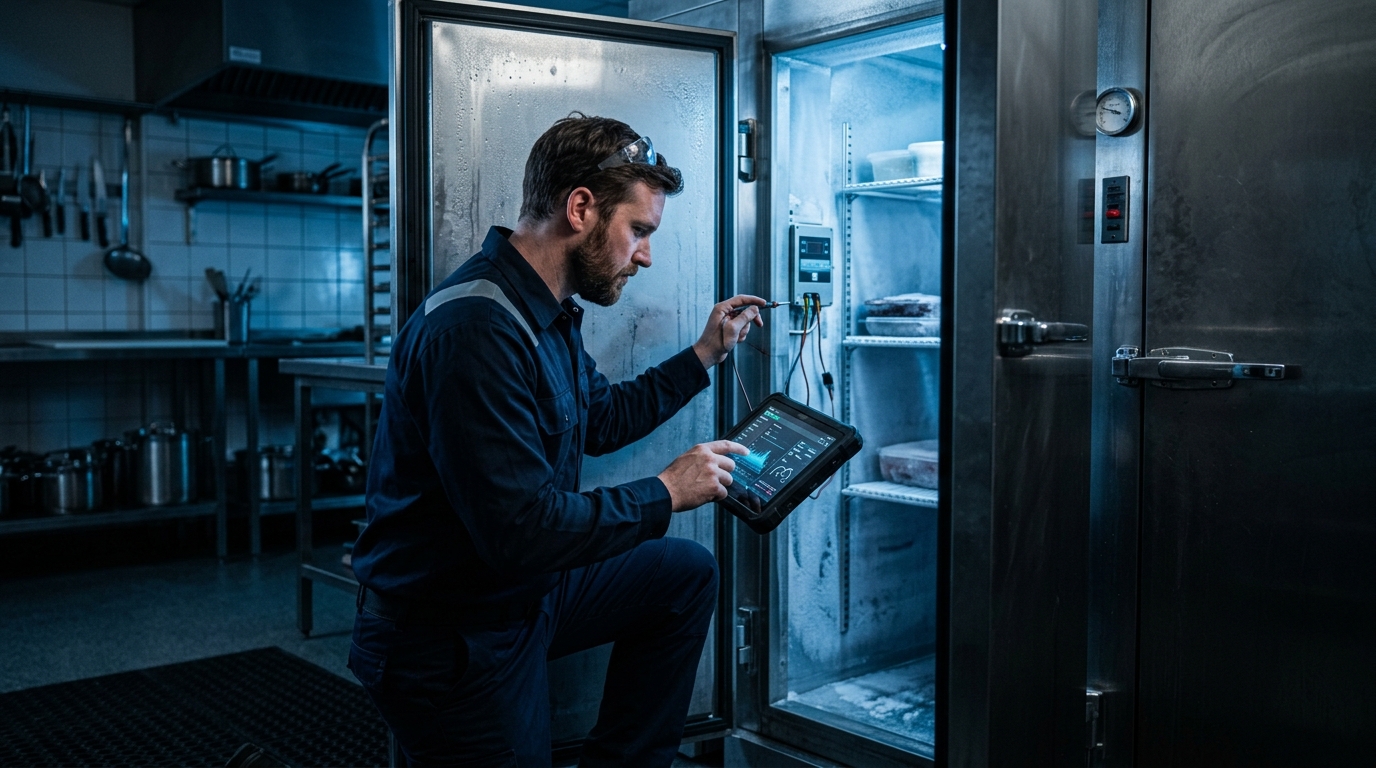
The system is run through a full commissioning cycle. Operating temperatures, pressures and electrical readings are recorded and checked against design parameters. You receive a commissioning report and a walkthrough of the system controls before the technician leaves site.
Timeline for a Typical Commercial Refrigeration Installation in Adelaide
One of the most common questions from Adelaide businesses is how long the process takes from first contact to a fully operational system. The answer depends on the project scope, but the typical timeline for common installation types is as follows.
1–2 Days
Upright and Underbench Units
Self-contained display fridges, prep units and bar refrigeration. Includes delivery, positioning, electrical connection, refrigerant check and commissioning.
3–5 Days
Small to Medium Cool Rooms
Panel assembly, door installation, refrigeration unit mounting, pipework, electrical connection, refrigerant charging and commissioning. Site readiness affects this timeline.
1–3 Weeks
Large or Custom Projects
Multi-room facilities, remote condensing systems and large-scale fitouts involving multiple trades, permit approvals and staged commissioning. Project managed end to end.
These timelines assume the site is ready prior to installation. Delays in electrical upgrades, building approvals or floor preparation can extend the schedule. Discussing your timeline requirements upfront with your refrigeration contractor allows them to plan the job sequence accordingly and flag any potential risks to your opening or trading date.
After Commercial Refrigeration Adelaide Installation: What to Expect
The period immediately following installation is important. New systems go through a stabilisation phase as components settle into their operating cycle and temperatures reach equilibrium. Knowing what is normal and what requires attention saves unnecessary concern and allows you to act quickly if something genuinely needs follow-up.
Initial Pull-Down Period
A new system will take several hours to pull down to operating temperature from ambient. Do not load stock into a cool room or display unit until it has reached its set point. Loading warm product before pull-down is complete places unnecessary strain on the compressor and extends the time to temperature.
Temperature Monitoring
Monitor and log internal temperatures for the first week of operation, particularly if your application involves food safety compliance. This establishes a verified baseline for your records and confirms the system is operating within its specified range under real load conditions.
Normal Sounds and Cycles
A new refrigeration system will cycle on and off regularly as the thermostat maintains set temperature. Some initial noise from fans and compressor operation is normal during the first few days as components bed in. If you notice persistent unusual sounds, excessive vibration or the compressor running continuously without reaching temperature, contact your installer promptly.
Condensation and Defrost Cycles
Some surface condensation is expected on external panels during initial operation, particularly in humid conditions. Defrost cycles, during which the system briefly raises evaporator temperature to clear ice build-up, are a normal and planned part of operation. Your technician will have configured the defrost schedule to suit your application during commissioning.
Ongoing Maintenance for Commercial Refrigeration Adelaide: Protecting Your Investment
The moment your new system is commissioned is the right time to schedule your first maintenance visit. Commercial refrigeration in Adelaide that receives regular servicing from the outset performs better, lasts longer and carries a lower total cost of ownership than equipment that is only attended to when something goes wrong.
Your Post-Installation Maintenance Checklist
Schedule your first service: Book a service visit within the first three to six months of operation to check all components under real operating conditions and update your compliance records.
Clean condenser coils regularly: In commercial kitchen environments, grease-laden air can coat condenser coils rapidly. Monthly visual checks and periodic cleaning prevent the efficiency loss that leads to compressor strain.
Check door seals monthly: Damaged or worn gaskets allow warm air infiltration that forces the system to work harder. Door seal replacement is a low-cost repair that prevents a high-cost downstream problem.
Maintain your logbook: Record every service visit, temperature excursion and repair in your equipment logbook. This is a compliance requirement for many industries and a valuable asset when assessing the performance of your equipment over time.
Sign up for a maintenance programme: A planned maintenance agreement with your refrigeration contractor gives you scheduled visits, priority response for breakdowns and predictable servicing costs across the year.
Cool-Time offers ongoing maintenance programmes tailored to the needs of Adelaide businesses across hospitality, retail, medical and industrial sectors. If you would like to discuss a maintenance plan that suits your operation, contact our team for a no-obligation conversation.
Frequently Asked Questions