Up To 30%
Increase in energy efficiency achieved through routine commercial refrigeration maintenance.
Zero Downtime
The primary goal of a preventative servicing schedule for hospitality businesses.
What is Commercial Refrigeration Maintenance?
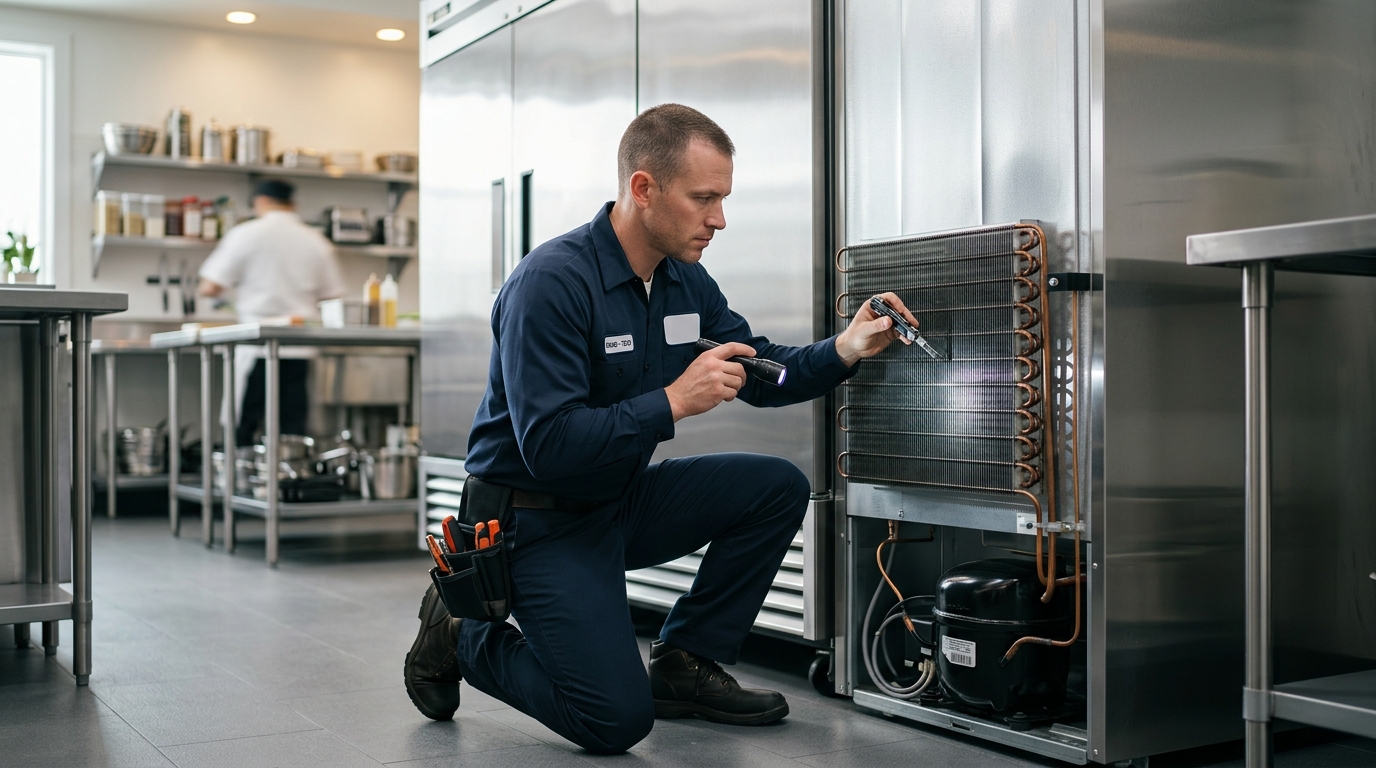
Commercial refrigeration maintenance involves the systematic inspection, cleaning, and mechanical tuning of commercial fridges, freezers, and cool rooms. Routine servicing ensures optimal temperature control, maximises energy efficiency, and prevents catastrophic mechanical failures that lead to expensive food spoilage and operational downtime.
Reliable cooling is the lifeblood of any modern hospitality or retail food business. Without consistent temperature regulation, your valuable inventory is at constant risk of perishing. Proper commercial refrigeration maintenance goes far beyond simply wiping down shelves. It requires a strategic approach to monitoring mechanical health.
When business owners neglect their cooling systems, the internal components are forced to work much harder to achieve target temperatures. This excessive mechanical strain accelerates wear and tear on critical parts like compressors and condenser fan motors. Ultimately, ignoring maintenance leads directly to premature equipment failure.
By implementing a structured servicing protocol, facility managers can eliminate the vast majority of surprise breakdowns. Regular diagnostics allow technicians to identify microscopic refrigerant leaks and worn electrical relays before they halt your entire kitchen operation. Proactive management protects your cash flow from unexpected disruptions.
The True Cost of Neglecting Your Cooling Systems
Ignoring preventative maintenance forces commercial refrigeration units to consume drastically more power, leading to inflated electricity bills and severe compliance risks. A single unpredicted breakdown can cost businesses thousands of dollars in lost inventory, emergency repair callout fees, and severe reputational damage.
Many venue operators view maintenance as an optional business expense rather than a vital operational safeguard. This perspective inevitably results in severe financial penalties. When condenser coils become choked with airborne kitchen grease and dust, the system cannot expel heat effectively. The compressor must then run constantly to compensate.
Continuous compressor operation causes a massive spike in your monthly electricity overheads. Energy inefficiency silently drains your profit margins. Furthermore, overworked compressors generate excessive internal heat, causing the delicate mechanical windings to burn out entirely.
Warning Signs of Impending System Failure
Do not wait for a complete breakdown. Watch for these crucial indicators that your equipment requires immediate professional attention.
Critical Symptoms:
- Fluctuating cabinet temperatures that struggle to meet safe storage requirements.
- Excessive frost or thick ice build-up around evaporator fans and internal walls.
- Unusual grinding, rattling, or squealing noises from the motor compartments.
- Spiking energy bills without a corresponding increase in venue operating hours.
- Puddles of water forming continuously under or around the cooling unit.
The Ultimate Commercial Refrigeration Maintenance Checklist
An effective commercial refrigeration maintenance strategy requires daily staff checks, weekly deep cleaning, and scheduled professional servicing. Combining in-house visual inspections with routine professional diagnostics keeps commercial fridges running reliably, maintains strict food safety compliance, and extends the lifespan of expensive assets.
Your internal team plays the first critical role in extending the life of your equipment. Staff should verify internal temperatures at the start and end of every shift. Checking door seals for cracks or food debris ensures warm air cannot infiltrate the cabinet. A compromised seal forces the unit to run continuously, wasting power.
However, surface-level cleaning is not enough to guarantee long-term reliability. To truly protect your investment, you must engage professional technicians for deep system diagnostics. When you partner with experts for commercial refrigeration adelaide services, technicians address the complex mechanical issues that staff cannot see.
In-House Daily Tasks
- Monitor and record internal cabinet temperatures.
- Wipe down exterior door gaskets to remove sticky debris.
- Ensure interior airflow is not blocked by overstocked products.
- Listen for any unusual operational noises.
Professional Scheduled Tasks
- Chemically clean condenser and evaporator coils.
- Test electrical connections and calibrate thermostats.
- Check precise refrigerant pressure levels.
- Clear primary and secondary condensate drain lines.
Clearing blocked drain lines is another critical task performed during professional commercial refrigeration maintenance. If condensate drains clog with algae or sludge, water quickly backs up and overflows into the storage cabinet. This creates an immediate health hazard and risks damaging the delicate defrost mechanisms.
Frequently Asked Questions About Refrigeration Servicing
Understanding the mechanics and scheduling of your cooling systems is vital for ongoing operational success. Below, we address the most common questions business owners have regarding proper commercial refrigeration maintenance and equipment care.
How often should I schedule commercial refrigeration maintenance?
Professional commercial refrigeration maintenance should be conducted every three to six months, depending directly on the volume of usage and the specific kitchen environment. High-traffic hospitality venues that produce significant amounts of airborne grease require highly frequent condenser coil cleaning to prevent severe system overheating.
By adhering to strict regular maintenance schedules, technicians can catch minor wear and tear before it escalates into a catastrophic compressor failure. Consistent scheduling is the best defense against unexpected operational downtime.
Can I perform commercial fridge maintenance myself?
Your staff can and absolutely should handle daily surface cleaning, door seal wiping, and diligent temperature monitoring. These basic tasks prevent major hygiene issues and maintain a tight seal on the cabinet doors, which significantly reduces energy waste during operating hours.
However, deep mechanical diagnostics, complex refrigerant leak testing, and electrical component checks must be performed by a fully licensed professional. Attempting to service internal electrical or gas components without proper certification often voids manufacturer warranties and creates severe workplace safety hazards.
Does regular servicing really save money on commercial refrigeration?
Yes. Comprehensive preventative maintenance is an operational investment that yields highly measurable financial returns through reduced energy consumption and significantly longer equipment lifespans. Systems clogged with heavy dust and grease consume up to 30% more electricity just to maintain standard food-safe temperatures.
Furthermore, scheduled servicing largely eliminates the need for expensive emergency repair callouts outside of regular business hours. By catching faults early, you protect your business cash flow from sudden, unpredictable, and massive equipment replacement expenses.
Implementing a thorough commercial refrigeration maintenance program is the single most effective way to protect your cooling assets. Without regular expert oversight, small mechanical inefficiencies compound into severe failures that ruin stock and halt trading completely.
Don’t wait for your critical refrigeration systems to fail during a busy service period. To keep your equipment running at peak efficiency, it is crucial to partner with experienced technicians. We encourage you to book a consultation with our expert team today to discuss a tailored preventative strategy for your venue.